
Community Stories
The Oldest House in the West Valley: The Story Behind Shadow Ranch
8/2/2026
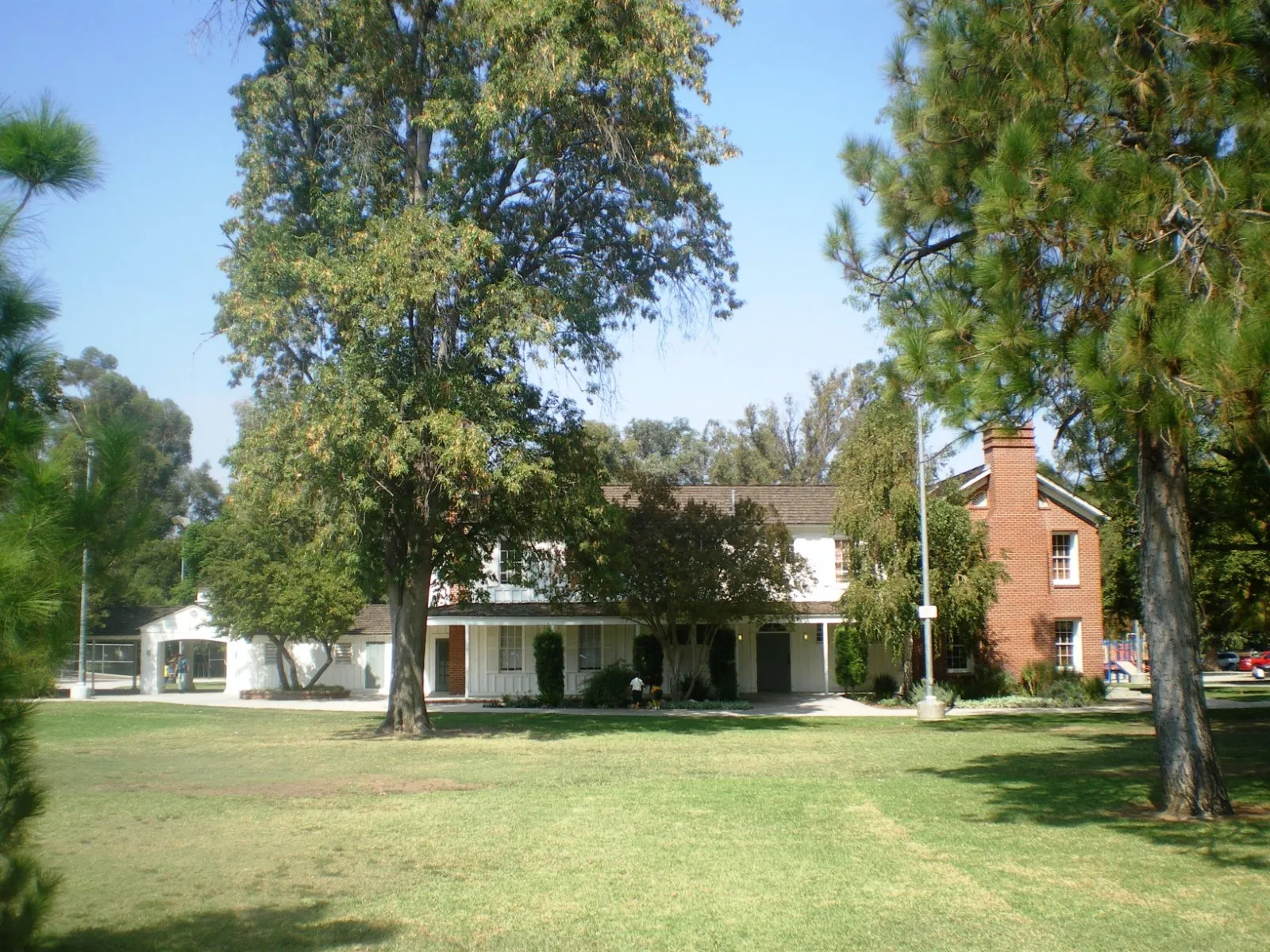
Photo: "Shadow Ranch, West Hills" by Los Angeles / Wikimedia Commons, CC BY-SA 3.0
The oldest standing structure in West Valley Guide's coverage area sits under a canopy of eucalyptus trees in a West Hills city park — and its story runs through wheat farming, Old Hollywood, and the founding of the neighborhoods we cover today.
Drive west on Vanowen Street past the last of West Hills' quiet residential blocks, and you'll find a low adobe-and-redwood house sitting under a canopy of eucalyptus trees older than the city block around it. It doesn't look like much from the street. Just a modest ranch house, a city park wrapped around it, kids on the basketball courts nearby. But this is the oldest standing structure in West Valley Guide's entire coverage area, and its story runs through wheat farming, Old Hollywood, and the very founding of the neighborhoods we cover today.
The Ranch That Became the Valley
Before there was a Woodland Hills, a Canoga Park, or a West Hills, there was a syndicate. In the 1860s, the San Fernando Homestead Association, led by Isaac Lankershim and Isaac Van Nuys (names that still mark streets across the Valley today), bought up huge stretches of the southern San Fernando Valley for wheat farming. One of the men who ran that operation was Albert Workman, an Australian immigrant who started as a ranch superintendent and, in 1869, bought roughly 9,000 acres of it outright.
Workman built his family's home between 1869 and 1872, using adobe brick and redwood lumber, construction methods that were already old-fashioned by the standards of a fast-growing 1870s California. He also did something that would quietly define the landscape of the whole western Valley for the next century: he imported eucalyptus tree seeds from his native Australia and planted them across the ranch. Those trees are why the house eventually got the name it carries today.
From Workman Ranch to Shadow Ranch
The property changed hands more than once in the early 20th century. By the time screenwriting couple Colin Clements and Florence Ryerson bought it, Workman's eucalyptus trees had grown into a dense, shading canopy over the old house, enough that Ryerson renamed the property "Shadow Ranch" for the shade they cast. Ryerson's own career adds a genuinely remarkable line to this house's history: she co-wrote the screenplay for The Wizard of Oz while living there.
Hollywood came calling again in 1961, when director William Wyler filmed scenes for The Children's Hour, based on the Lillian Hellman play, on the property. It was one of several mid-century productions that used the ranch's rustic, already-historic look as a filming location.
An Official Landmark Since 1962
In 1962, the City of Los Angeles designated Shadow Ranch as Historic-Cultural Monument No. 9, one of the very first properties to receive that designation when the city's landmark program began. A historical marker on site, erected the same year by the City of Los Angeles, still commemorates it. For much of the 20th century the property was associated with Canoga Park; it now sits within West Hills' boundaries.
What's There Today
Shadow Ranch isn't a roped-off museum piece. It's an active, well-used Los Angeles city park. The historic ranch house still stands on the property, now used for community events and recreation, and the surrounding 13-acre park has basketball courts, picnic areas, playgrounds, and community meeting rooms that see regular use from West Hills families every week.
Shadow Ranch Park 22633 Vanowen Street, West Hills, CA 91307 Operated by the City of Los Angeles Department of Recreation and Parks
The next time you're passing through West Hills, it's worth a stop. Not just to see the oldest building in our coverage area, but to stand under trees a 19th-century Australian immigrant planted before any of the neighborhoods around them existed.